
UPKO: From the Legacy of Malaysia’s Formation to an Indigenous Political Institution in the Twenty-First Century

POLITICAL ANALYSIS
By Mohd Khairy Abdullah
Pensiangan, Sabah
IN modern political science, the strength of a political party is no longer measured solely by the number of parliamentary or state seats it wins in elections. Rather, a truly influential party is one that evolves into a political institution—an organization with a strong historical foundation, enduring legitimacy, a distinct identity, and the capacity to adapt its mission to changing social and political realities.
American political scientist Samuel P. Huntington, in his seminal work Political Order in Changing Societies, argues that a political organization becomes institutionalized when it demonstrates continuity of leadership, organizational stability, shared values, and the resilience to endure successive political transitions.
Within Sabah’s political landscape, only a handful of political parties possess a historical trajectory that fulfills these characteristics. One of them is the United Progressive Kinabalu Organisation (UPKO), whose origins are deeply intertwined with the formation of Malaysia in 1963 and the political evolution of Sabah’s indigenous communities.
Understanding UPKO today, however, requires more than simply tracing its name changes or leadership transitions. Its history reflects the broader transformation of Sabah’s politics—from an era dominated by identity-based struggles to one increasingly shaped by development, federalism, and inclusive governance.
Before the formation of Malaysia, Sabah’s political environment differed significantly from what it is today. Indigenous communities had limited institutional avenues through which they could articulate their political aspirations under British colonial administration.
The momentum for change emerged during the negotiations leading to the establishment of Malaysia, when Sabah’s people were given an unprecedented opportunity to determine their own political future. It was during this critical period that Tun Fuad Stephens (Donald Stephens) emerged as one of the principal architects of modern Sabah politics.
The establishment of the United National Kadazan Organisation (UNKO) represented far more than the creation of another political party. It marked the political awakening of the Kadazandusun community, recognizing the need for an organized platform capable of safeguarding their rights, identity, and interests within the newly established Federation of Malaysia.
From the perspective of Political Identity Formation, this period represents the formative stage in which a community develops a collective political consciousness. It is the moment when people begin to recognize their shared interests and acknowledge the necessity of an institution capable of representing those aspirations within the governing system.
Tun Fuad Stephens understood that Sabah’s participation in the Malaysian federation required its indigenous communities to possess an organized and credible political voice. Consequently, his struggle extended well beyond questions of ethnic identity. It also addressed issues of power-sharing, federal-state relations, and Sabah’s constitutional position within the new federation.
Following Malaysia’s formation, UNKO underwent several phases of organizational adaptation before eventually becoming known as the United Pasokmomogun Kadazan Organisation (UPKO).
From a political science perspective, such transformations are neither unusual nor unexpected. Political parties frequently evolve in response to changing social conditions, demographic shifts, and increasing political competition. What matters most is whether their foundational principles and core mission remain intact.
UPKO gradually emerged as the principal political vehicle representing the interests of the Kadazandusun, Murut, and Rungus (KDMR) communities, particularly in advocating greater indigenous participation in Sabah’s development.
Yet its original mission extended far beyond ethnic representation alone. The party also sought to ensure that Sabah’s indigenous peoples gained equitable access to education, economic opportunities, public administration, and meaningful participation in the nation-building process.
This broader vision explains why UPKO’s history cannot be separated from the history of Malaysia’s formation itself.
The theory of Historical Institutionalism argues that political institutions are shaped through long historical processes. Decisions made during one historical period continue to influence political developments across subsequent generations.
UPKO provides a compelling illustration of this theory.
Despite experiencing changing political environments, leadership transitions, and repeated organizational restructuring, the party’s central narrative has consistently remained rooted in advancing the interests of Sabah’s indigenous communities.
This enduring legacy distinguishes UPKO from many newer political parties that emerge primarily to contest elections but lack deeper institutional foundations.
Political parties with long historical traditions often enjoy what political scientists describe as institutional legitimacy—public trust derived from decades of accumulated experience and sustained engagement with society.
However, historical legitimacy also brings considerable responsibility.
In contemporary democracies, history provides a valuable foundation, but it does not guarantee continued electoral support. Today’s voters, particularly younger generations, are increasingly performance-oriented rather than nostalgic. They expect political parties to translate historical ideals into concrete public policies that improve living standards, expand employment opportunities, strengthen education, and promote sustainable development.
This is where UPKO’s greatest challenge begins.
The legacy established by Tun Fuad Stephens has provided the party with a powerful moral and political foundation. Yet to remain relevant in the twenty-first century, that legacy must continually evolve to address the demands of an increasingly dynamic society.
It was this challenge that paved the way for another pivotal figure in the party’s history—Tan Sri Bernard Dompok.
Far more than simply reviving the UPKO name after nearly three decades, Bernard Dompok initiated the reconstruction of the party as a modern political institution capable of operating effectively within the increasingly complex political landscape of both Sabah and Malaysia.
His leadership marked the beginning of a new chapter in UPKO’s evolution—from a party born during the formation of Malaysia into a mature political institution seeking to reconcile its historical legacy with the challenges of the twenty-first century.
Following the pioneering era of Tun Fuad Stephens, Sabah entered a far more complex phase of political development. Frequent changes in the state government, the emergence of new political parties, growing competition between local and national parties, and evolving voting patterns forced nearly every political institution in Sabah to reassess its relevance.
It was in this environment that Tan Sri Bernard Dompok emerged as the leader who revived the continuity of indigenous political representation. He first established the Sabah Democratic Party (PDS) in 1994 before making a decision of profound symbolic and institutional significance: restoring the historic name United Pasokmomogun Kadazan Organisation (UPKO).
From the perspective of political science, this was far more than a simple rebranding exercise. It represented an act of institutional restoration—the deliberate revival of a historical political institution whose legitimacy had long been associated with the aspirations of the Kadazandusun, Murut, and Rungus (KDMR) communities.
According to the theory of Historical Institutionalism, advanced by scholars such as Paul Pierson and Kathleen Thelen, institutions with deep historical roots enjoy a significant advantage because society perceives them as a continuation of earlier political struggles. Such legitimacy cannot be manufactured overnight; it is accumulated through generations of shared political experience and collective memory.
This became one of UPKO’s greatest institutional strengths.
Bernard Dompok understood that history should never function merely as political nostalgia. Instead, he regarded history as institutional capital—a strategic asset that could reinforce public confidence by demonstrating that the party possessed historical depth, organizational experience, and political credibility.
Yet he also recognized an equally important reality: history alone was insufficient.
By the late 1990s and the beginning of the twenty-first century, Sabah’s political agenda had shifted considerably. Economic development, the relationship between Sabah and the Federal Government, and the pursuit of political stability increasingly became the defining issues of public debate.
Recognizing these changing priorities, Bernard Dompok gradually expanded UPKO’s political agenda beyond identity politics. While preserving its indigenous roots, the party increasingly focused on development, federalism, and Sabah’s role within Malaysia’s national development framework.
His participation in the Federal Government also gave UPKO a new national dimension. It enabled the party to advocate Sabah’s development agenda at the federal level while demonstrating that a Sabah-based party could make meaningful contributions to national policymaking.
This reflected Hanna Pitkin’s theory of Political Representation, which argues that effective political representation involves far more than winning elections. Genuine representation requires elected leaders to ensure that the interests of their constituents are translated into public policy and governmental decision-making.
Through this approach, UPKO strengthened its position as a party committed not only to protecting indigenous identity but also to promoting Sabah’s broader economic and social development.
The social transformation that accelerated after 2000 introduced an entirely new political landscape.
Sabah experienced rapid urbanization, the expansion of higher education, the emergence of a larger middle class, and the rise of a younger generation whose political priorities differed substantially from those of their predecessors.
Earlier generations had understandably focused on questions of identity, constitutional rights, and political recognition.
Younger voters, however, increasingly evaluated political parties according to their ability to create employment opportunities, raise incomes, improve educational outcomes, expand the digital economy, and strengthen public governance.
This shift demanded a deeper organizational transformation.
It was during this period that Datuk Seri Panglima Wilfred Madius Tangau assumed the leadership of UPKO.
His tenure can be regarded as a pivotal stage in the party’s evolution—from an organization rooted primarily in identity politics into one increasingly defined by a development-oriented political agenda.
This transition closely reflects Otto Kirchheimer’s Catch-All Party Theory, which argues that political parties seeking long-term relevance must broaden their electoral appeal by promoting policies with universal benefits while preserving their core identity.
Under Madius Tangau’s leadership, UPKO placed greater emphasis on human capital development, education, innovation, science and technology, digital transformation, research, and youth empowerment.
These changes did not occur by chance.
They reflected broader shifts in Sabah’s electoral behavior, where voters were becoming increasingly concerned with practical governance and economic opportunities rather than ethnic identity alone.
Modern democratic politics has become increasingly performance-driven.
Voters no longer support parties simply because of their historical legacy. Instead, they judge political organizations according to their ability to solve everyday problems and improve people’s quality of life.
Madius Tangau’s leadership represented a conscious effort to reposition UPKO within this new political environment.
Equally significant was his attempt to broaden UPKO’s image beyond its traditional ethnic base.
While remaining firmly rooted in the KDMR community, the party increasingly presented itself as an inclusive political organization willing to cooperate across ethnic and religious boundaries.
This approach aligns closely with the theory of Cross-Cutting Cleavages, developed by Seymour Martin Lipset and Stein Rokkan.
According to this theory, plural societies achieve greater political stability when political parties transcend narrow ethnic or religious divisions and instead build coalitions across multiple social identities.
Given Sabah’s extraordinary diversity—with more than thirty ethnic communities—such an approach carries considerable strategic importance.
Although UPKO has remained historically associated with the KDMR community, it has gradually attracted support from other communities that share common aspirations for economic development, political stability, and a stronger future for Sabah.
This transformation has fundamentally reshaped public perceptions of the party.
Rather than being viewed solely as an ethnic-based organization, UPKO increasingly sought to establish itself as a development-oriented party committed to serving all Sabahans.
Nevertheless, institutional transformation is never without challenges.
Competition from parties such as PBS, STAR, Parti Warisan, and other Sabah-based political movements created an increasingly competitive political environment. Each offered its own narrative concerning Sabah’s rights, state development, and relations with the Federal Government.
Within this increasingly crowded political landscape, UPKO’s greatest challenge became maintaining the delicate balance between preserving its historical identity and embracing institutional renewal.
This balance between historical continuity and political adaptation ultimately became the defining test of UPKO’s evolution as a modern political institution.
It was upon this institutional foundation—constructed under Bernard Dompok and further strengthened during Wilfred Madius Tangau’s leadership—that Datuk Ewon Benedick would later guide UPKO into its next phase of political development.
Every political institution that survives across generations eventually reaches a defining moment that determines whether it remains part of history or becomes an institution capable of shaping the future.
For UPKO, that moment began when Datuk Ewon Benedick assumed the party’s leadership.
He inherited a political landscape fundamentally different from those navigated by Tun Fuad Stephens or Tan Sri Bernard Dompok. Sabah’s electorate had become younger, better educated, more digitally connected, and increasingly inclined to judge political parties by their governing performance rather than by their historical legacy.
This transformation reflects a broader trend observed across contemporary democracies. Political scientist Russell J. Dalton describes it as the shift from the “politics of identity” to the “politics of performance,” where a party’s legitimacy increasingly depends on its ability to deliver tangible results rather than relying on historical symbolism or ideological heritage.
Within this changing environment, Ewon Benedick’s leadership has sought to reposition UPKO from a party primarily associated with identity politics into one focused on development-driven governance.
His emphasis on entrepreneurship, micro, small and medium enterprises (MSMEs), education, human capital development, the digital economy, innovation, and employment creation reflects a deliberate effort to align the party with issues that directly affect the everyday lives of Sabahans.
From the perspective of Issue Ownership Theory, developed by John Petrocik, political parties gain long-term electoral advantages when voters consistently associate them with issues that are both important and competently managed.
For UPKO, this means that the party’s future reputation cannot depend solely on its historic role as a representative of the KDMR community. Instead, it must establish itself as a credible advocate for Sabah’s broader development agenda.
This strategic shift also has important implications for UPKO’s role within Sabah’s evolving party system.
Its participation as a component party of Gabungan Rakyat Sabah (GRS) represents one of the most significant developments in the party’s institutional evolution.
From a political science perspective, joining a coalition centred on Sabah-based parties is not simply a matter of electoral cooperation or seat-sharing. Rather, it represents a broader institutional strategy designed to enhance the party’s influence over public policy.
The theory of Coalition Governance suggests that in fragmented, multi-party political systems, parties can often shape public policy more effectively as members of stable governing coalitions than by operating independently.
For UPKO, participation in GRS provides an expanded platform to advance Sabah’s interests, including the implementation of the Malaysia Agreement 1963 (MA63), strengthening federalism, promoting rural development, improving education, expanding the local economy, and enhancing the institutional capacity of the state government.
Within this framework, UPKO is no longer viewed solely as a party representing one indigenous community. It increasingly positions itself as part of a broader Sabah-centred political coalition dedicated to advancing the state’s long-term interests.
Sabah’s defining characteristic has always been its extraordinary diversity.
No single ethnic community constitutes an overwhelming demographic majority. Instead, political stability has historically depended upon the ability of political leaders to build cooperation among numerous ethnic, religious, and cultural communities.
Political scientist Arend Lijphart, through his theory of Consociational Democracy, argues that deeply plural societies achieve greater stability when political elites emphasize power-sharing, negotiation, and cooperation rather than ethnic competition.
UPKO’s institutional evolution increasingly reflects this principle.
Although the party’s historical roots remain firmly embedded within the KDMR community, its development over the past two decades demonstrates a sustained effort to broaden participation and appeal across Sabah’s diverse population.
This expansion does not imply abandoning the party’s original identity.
Instead, it represents an effort to transform that identity into the foundation of a more inclusive political institution capable of serving a wider constituency.
This approach is also consistent with the theory of Cross-Cutting Cleavages, developed by Seymour Martin Lipset and Stein Rokkan.
The theory argues that political parties capable of transcending ethnic, religious, and regional divisions are generally better equipped to reduce political polarization.
When citizens simultaneously identify themselves as Sabahans, entrepreneurs, students, rural residents, professionals, or young voters, political preferences become increasingly shaped by shared socioeconomic interests rather than ethnic affiliation alone.
This evolution has become increasingly visible in Sabah’s contemporary politics.
Traditionally, UPKO has been closely associated with the Kadazandusun, Murut, and Rungus communities. That historical connection remains central to the party’s identity.
Yet twenty-first century politics demands a broader measure of political strength.
Today, a party’s influence depends less on the size of the ethnic group it represents and more on its capacity to inspire confidence across diverse communities.
If this institutional transformation continues successfully, UPKO possesses the potential to evolve into a political party capable of attracting broader support from Sabah’s indigenous population—including Muslim Bumiputera communities and other ethnic groups that share common aspirations for economic development, accountable governance, and long-term political stability.
Such an outcome, however, cannot be achieved automatically.
It requires the continuous cultivation of public trust, the development of genuinely inclusive public policies, and a careful balance between preserving historical identity and responding to contemporary political realities.
The theory of New Regionalism offers an important perspective in this regard.
Successful regional parties are those that effectively defend the interests of their states or regions while remaining fully engaged within the broader national political framework.
Rather than promoting separation, they function as bridges between regional priorities and national policymaking.
For Sabah, this approach is increasingly relevant as issues such as MA63, state revenues, infrastructure development, rural poverty, and local economic empowerment continue to dominate political discourse.
Although UPKO’s participation in GRS has expanded its political opportunities, it has also increased the party’s responsibilities.
In any governing coalition, every component party must demonstrate its practical value to both the government and the electorate.
Electoral support cannot be sustained unless participation in government produces measurable policy outcomes that improve people’s lives.
Consequently, UPKO must continue strengthening its identity as a party that contributes ideas, policies, and practical solutions to Sabah’s most pressing challenges—including quality employment, rural development, educational reform, support for small and medium enterprises, digital transformation, and narrowing the development gap between urban centres and the state’s interior regions.
For Sabah’s younger generation, these issues are considerably more relevant than debates over historical party legacies.
Accordingly, UPKO’s future strength will depend not merely on the legacy of Tun Fuad Stephens, the institutional reconstruction undertaken by Bernard Dompok, or the organizational reforms introduced by Wilfred Madius Tangau.
Its long-term success will ultimately be determined by Datuk Ewon Benedick’s ability to translate those historical foundations into effective public policies that enhance the well-being of Sabah’s people while strengthening the state’s position within the Malaysian federation.
This is the defining measure of a modern political institution.
More than six decades after the formation of Malaysia, Sabah is once again undergoing a profound political transformation. Political competition is no longer defined simply by contests between local and national parties. Increasingly, it is shaped by competing ideas, policy alternatives, and the ability of political institutions to govern effectively within an increasingly sophisticated society.
Against this backdrop, the central question is no longer whether a political party possesses a distinguished history, but whether that history can continue to generate public confidence and political relevance.
For UPKO, this question carries particular significance because the party possesses an advantage few political organizations in Sabah can claim: an institutional lineage that stretches from the formation of Malaysia, through decades of organizational reconstruction, into the era of modern political transformation, and now within the framework of Gabungan Rakyat Sabah (GRS).
Yet, as political scientists Scott Mainwaring and Timothy Scully argue in their theory of Party System Institutionalization, longevity alone does not guarantee political influence. Political parties remain relevant only when citizens continue to perceive them as stable, credible institutions with enduring links to society.
For UPKO, therefore, the greatest challenge is not preserving its history, but continually reinforcing that relationship through effective leadership, sound public policy, and measurable performance.
Sabah’s elections over the past two decades have revealed an increasingly clear trend.
Voter behaviour has become more fluid.
Partisan loyalty has weakened.
Electoral preferences are increasingly shaped by current issues, government performance, economic conditions, and confidence in political leadership rather than inherited party loyalties.
This development corresponds closely with the theory of Electoral Dealignment, which argues that contemporary voters are becoming progressively less attached to traditional political parties and more willing to change their support according to government performance and changing circumstances.
For Sabah’s political parties, including UPKO, this transformation carries two important implications.
First, history continues to matter because it provides institutional legitimacy.
Second, history alone is no longer sufficient to secure electoral support.
Every political party must continuously demonstrate that it remains capable of delivering value to society.
Viewed through this broader historical lens, UPKO’s institutional evolution reveals a remarkable process of political adaptation.
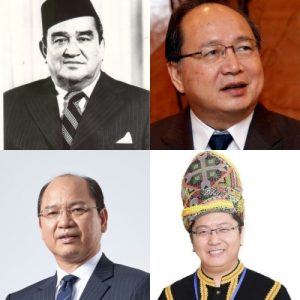
Tun Fuad Stephens laid the foundations for indigenous political consciousness during the formation of Malaysia.
Tan Sri Bernard Dompok rebuilt institutional continuity and restored the party’s historical legitimacy.
Datuk Seri Panglima Wilfred Madius Tangau expanded UPKO’s orientation toward development, inclusiveness, and modernization.
Datuk Ewon Benedick has further strengthened this transformation by emphasizing entrepreneurship, economic empowerment, youth development, micro, small and medium enterprises (MSMEs), and Sabah’s strategic role within the Malaysian federation.
Taken together, these four leadership eras illustrate a gradual transition from identity-based politics toward policy-based politics.
Within mature democracies, such a transition is generally regarded as a sign of institutional adaptation rather than institutional decline.
Political parties survive not because they remain unchanged, but because they successfully reinterpret their founding principles in response to evolving public expectations.
Ultimately, however, successful adaptation depends on one decisive factor:
The ability to transform public policy into tangible outcomes that improve people’s lives.
UPKO’s participation in Gabungan Rakyat Sabah (GRS) has created a political environment unlike any previous period in the party’s history.
As a member of a coalition led primarily by Sabah-based parties, UPKO now occupies a position from which it can contribute directly to public policymaking while advancing Sabah’s long-term development agenda.
According to the theory of Coalition Governance, participation in a governing coalition provides political parties with greater opportunities to shape public policy.
At the same time, coalition membership also imposes greater political accountability.
Influence within government inevitably brings greater responsibility for governmental performance.
If coalition policies produce meaningful improvements in public welfare, participating parties strengthen their own legitimacy.
Conversely, when governments fail to meet public expectations, all coalition partners share responsibility for those shortcomings.
Consequently, UPKO’s future credibility will depend not only on its historical legacy but also on its effectiveness as a governing party.
One of Sabah’s greatest political challenges remains the creation of enduring cooperation among communities distinguished by diverse ethnic, religious, and cultural backgrounds.
Within this context, UPKO’s greatest opportunity lies in preserving its historical KDMR roots while simultaneously broadening its appeal across Sabah’s wider society.
This institutional strategy reflects the logic of Cross-Cutting Cleavages, which suggests that political parties capable of bridging social divisions are generally better equipped to promote political stability.
Yet broader public acceptance cannot be achieved through slogans or organizational rebranding alone.
It requires genuinely inclusive public policies, trusted leadership, sustained grassroots engagement, and an institutional willingness to respond to the diverse concerns of Sabah’s communities.
In other words, the party must increasingly be perceived as an institution representing common interests rather than the exclusive aspirations of any single group.
This objective also aligns with Anthony Downs’ Spatial Competition Theory, which argues that successful political parties gradually adjust their policy positions toward the preferences of the broader electorate without alienating their traditional supporters.
For UPKO, this offers an important lesson.
The electorate does not expect the party to abandon its historical identity.
Rather, voters expect that identity to evolve in ways that address the realities of contemporary Sabah.
Its roots within the KDMR community remain one of the party’s greatest institutional strengths.
That strength, however, becomes even more meaningful when combined with policies addressing concerns shared by all Sabahans—quality employment, educational excellence, rural development, entrepreneurship, digital transformation, youth empowerment, and transparent, accountable governance.
These are the standards by which twenty-first-century voters increasingly judge political institutions.
UPKO’s political journey illustrates the evolution of an institution that has continually adapted to changing historical circumstances.
Tun Fuad Stephens established the foundations of indigenous political consciousness during the formation of Malaysia.
Tan Sri Bernard Dompok restored institutional continuity and ensured that the party’s historical legacy endured.
Datuk Seri Panglima Wilfred Madius Tangau broadened the party’s orientation toward modernization, inclusiveness, and development.
Datuk Ewon Benedick has further strengthened this transformation by prioritizing economic development, entrepreneurship, community empowerment, and Sabah’s strategic position within the Malaysian federation.
Together, these four leadership eras demonstrate that UPKO has never been a static political organization.
Rather, it has evolved into a political institution that continually adapts to changing societal expectations and an increasingly competitive political environment.
Its future will not ultimately be determined by history alone.
Instead, it will depend on whether that history continues to carry meaning for contemporary and future generations.
If UPKO succeeds in maintaining a careful balance between its historical legacy, inclusive politics, and development-oriented public policies, it has the potential to remain one of Sabah’s most influential indigenous political institutions for decades to come.
In modern democracy, the value of a political institution is measured neither by its age nor by nostalgia.
It is measured by its ability to earn public trust, solve society’s most pressing challenges, and provide a credible vision for the future.
That is the true test that will determine UPKO’s place in Sabah’s political landscape in the decades ahead.
