
Sabah’s Silent Crisis: How Immigration Policy Failures Are Testing the State’s Sovereignty and Future

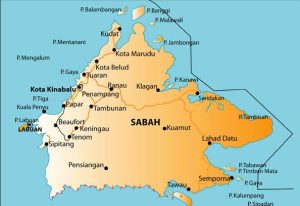
By Mohd Khairy Abdullah
PENSIANGAN, Sabah, July 14 — Sabah has not lacked warnings. For decades, the issue of undocumented migrants has been raised across political, security and community platforms. Yet despite repeated enforcement operations, a fundamental question remains unanswered: why does a state of such strategic importance to Malaysia continue to struggle with the same border control challenges from one generation to the next?
This issue is no longer merely an immigration matter. It has become a test of the country’s ability to manage its borders, protect the interests of local communities and ensure that administrative systems are not easily exploited.
Over the years, the government has carried out various enforcement operations, including arrests and deportations of individuals who violate immigration laws. However, a reactive approach has yet to deliver a solution that addresses the root causes of the problem.
The central question is not only about who enters Sabah, but how a system that allows undocumented entry, illegal employment and administrative loopholes continues to exist.
Sabah’s geographical position makes it one of the most challenging regions to govern. With an extensive coastline, long maritime borders and proximity to Indonesia and the Philippines, the state faces complex migration pressures.
However, geography alone cannot remain the main explanation. A country with modern security capabilities, institutional structures and regional cooperation should be able to develop more effective mechanisms to manage its borders.
The failure to contain the problem after decades suggests that the real challenge may not be a lack of enforcement operations, but weaknesses in policy coordination, implementation and migration management.
For many Sabah residents, the issue is not merely about statistics. It affects everyday life — from urban planning and public infrastructure capacity to economic opportunities and community security.
Essential services such as roads, water supply, electricity, utilities, healthcare and public safety are developed through government allocations and national resources supported by taxpayers.
When population growth occurs without clear documentation and planning, pressure on public services becomes a major concern among local communities. The question is not simply who uses these facilities, but how the government ensures that public systems can accommodate demographic changes in a planned and equitable manner.
Concerns have grown as some undocumented individuals are believed to have remained in Sabah for extended periods, established families and developed social ties within local communities.
Marriage between foreign nationals and Malaysian citizens is recognised within society. However, weaknesses in monitoring immigration status may create enforcement challenges if family relationships are misused to obtain longer-term residency, economic access or to avoid immigration action.
Another issue drawing public attention is allegations that some foreign nationals use relationships with local partners to gain access to business licences, commercial spaces or business registrations.
If such systems are abused, the impact goes beyond enforcement challenges. It may also affect local entrepreneurs who operate legally and comply with established regulations.
However, addressing these issues must be based on evidence and enforcement of the law, not assumptions. The government must ensure that business licensing systems, immigration documentation and economic monitoring remain transparent and resistant to manipulation.
The education sector further demonstrates the complexity of irregular migration. Sabah has institutions such as the Indonesian School Kota Kinabalu and Community Learning Centres established through Malaysia-Indonesia cooperation to provide education for Indonesian children, particularly those from families working in the plantation sector.
At the same time, the presence of undocumented children highlights the long-term consequences of irregular migration. When a new generation grows up without clear legal status, immigration issues evolve into broader social, educational and humanitarian challenges.
From an economic perspective, Sabah faces a difficult balance. Several sectors, including plantations, construction, fisheries and labour-intensive industries, continue to rely on foreign workers.
This creates a policy paradox. Sabah needs labour, but it must also ensure that recruitment systems, documentation processes and enforcement mechanisms do not create opportunities for uncontrolled migration.
The issue of undocumented migrants in Sabah also has a long political history. The establishment of the Royal Commission of Inquiry (RCI) on illegal immigrants in Sabah demonstrated that the government recognised the seriousness of the matter.
However, recognising the problem is not enough. Sabah residents want visible change — stronger border control, a more effective immigration system and firm action against those who exploit weaknesses in the system.
Failure to address the issue comprehensively has also raised concerns about Sabah’s long-term demographic trajectory.
If weaknesses in border management, population documentation and migration control continue without meaningful reform, cumulative social changes could significantly affect the state’s demographic structure over several generations.
The concern among some Sabah communities is not simply about the presence of foreign communities. The deeper question is whether demographic changes occur within a controlled legal framework or as a consequence of systemic failures.
The measure of government success should no longer be limited to the number of operations, arrests or deportations. The true measure is whether the country can secure its borders, dismantle human smuggling networks, eliminate opportunities for system abuse and restore public confidence.
Sabah cannot continue to bear the consequences of policy weaknesses inherited from one administration to another.
The state requires a bolder approach — technology-driven border control, continuous enforcement, action against trafficking networks, a transparent foreign worker management system and immigration policies that place the interests of Sabah’s people as a priority.
Ultimately, the issue of undocumented migration is not only about who is in Sabah. It is about whether a nation can defend its borders, protect its people and ensure that the future of a state is not shaped by the policy failures of today.
