

 By Mohd Khairy Abdullah
PENSIANGAN, (Sabah, Mlaysia) 3 Jul 2026 — One of the most fundamental principles of public policy is that communities contributing to a nation’s prosperity should also share fairly in its benefits. Yet this principle appears increasingly difficult to reconcile with the realities facing the people of Sabah and Sarawak.
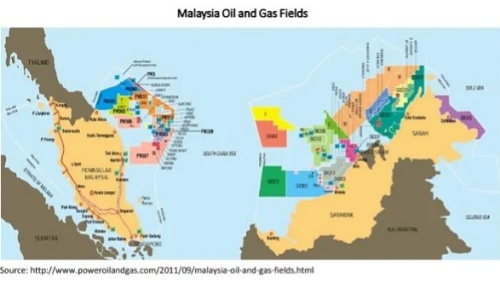
For more than five decades, the two Bornean states have stood at the heart of Malaysia’s petroleum industry. Oil and natural gas extracted from their offshore fields have generated billions of ringgit in government revenue, strengthened Malaysia’s fiscal position, financed national development and helped sustain economic growth.
Yet, despite being among the country’s principal energy-producing regions, many Sabahans and Sarawakians find themselves excluded from diesel subsidy schemes because of administrative rules that often fail to reflect how people actually live and work.
This is more than a policy inconsistency. It is a contradiction that raises important questions about fairness, federalism and resource governance.
A well-designed subsidy should ease the burden of rising living costs. When eligibility becomes overly dependent on rigid administrative requirements, however, the policy risks penalising the very people it was intended to protect.
In Sabah, the realities of daily life differ significantly from those in Peninsular Malaysia. Four-wheel-drive diesel vehicles are not symbols of affluence; they are essential tools for survival. Farmers, smallholders, traders and rural families depend on them to transport crops, deliver supplies, reach schools, access healthcare and connect communities separated by difficult terrain and limited infrastructure.
Thousands of these vehicles are inherited, purchased through informal financing arrangements or remain registered under family members because ownership transfers can be costly, time-consuming or impractical in remote areas.
Although these individuals are the actual users who bear the cost of fuel every day, many remain ineligible for subsidised diesel simply because the registration documents do not carry their names.
The central question is straightforward.
Should public policy be designed around administrative paperwork, or around the realities experienced by the people it is meant to serve?
Effective governance requires policies that recognise social and economic realities rather than relying solely on bureaucratic compliance. When regulations become detached from everyday life, they risk undermining the very objectives they seek to achieve.
The issue becomes even more significant given Sabah and Sarawak’s role as Malaysia’s principal petroleum-producing states. It is therefore understandable that many residents question why access to subsidised diesel remains subject to restrictions despite the fact that much of the nation’s petroleum wealth originates from their own lands and waters.
This is not an argument against subsidy reforms or fiscal discipline. Fuel leakages, smuggling and abuse of public funds must be addressed. Every responsible government has an obligation to ensure that subsidies are well targeted and financially sustainable.
However, efforts to eliminate abuse should not come at the expense of legitimate users whose livelihoods depend on diesel-powered transport.
A more balanced approach deserves serious consideration.
If petrol subsidies are broadly available to Malaysian citizens through a relatively straightforward system, it is reasonable to ask whether diesel subsidies should evolve towards a similar principle—one that prioritises citizenship and genuine domestic use rather than relying almost exclusively on vehicle registration records that often fail to identify the real user.
Equally important, federal policymakers must recognise that Sabah and Sarawak operate under economic and geographical conditions fundamentally different from those of Peninsular Malaysia. Distances are greater, public transport remains limited across large rural areas, agricultural communities are widely dispersed and diesel-powered vehicles remain indispensable to local economic activity.
A uniform policy that overlooks these structural differences risks producing systemic inequality rather than equitable governance.
Ultimately, this debate extends well beyond diesel subsidies.
It speaks to the broader relationship between the Federal Government and Malaysia’s Bornean states, to questions of fiscal justice, and to whether regions that have contributed substantially to the nation’s prosperity are receiving policies that adequately reflect their role in creating that prosperity.
Prime Minister Datuk Seri Anwar Ibrahim has an opportunity to revisit this policy framework—not merely as an administrative adjustment or a political consideration, but as a demonstration that fairness, federal partnership and evidence-based policymaking remain central to Malaysia’s governance.
The people of Sabah and Sarawak are not asking for special treatment.
They are asking for a fair share of the benefits generated from the natural resources that have long helped power Malaysia’s economy.
In the end, the true measure of a resource-rich nation is not how much wealth it extracts from the ground.
It is how fairly that wealth is returned to the people whose land has made such prosperity possible.
