

 By Mohd Khairy Abdullah
KOTA KINABALU, 29 April 2026 — The Sabah government is accelerating the implementation of strategic projects across the industrial, entrepreneurship, logistics and transportation sectors as part of a broader effort to strengthen the state’s economic position amid intensifying regional competition for investments.
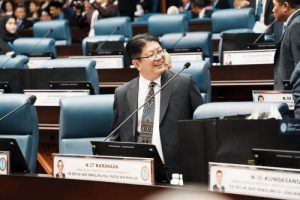
Sabah Minister of Industrial Development, Entrepreneurship and Cooperatives and Deputy Chief Minister III, Ewon Benedick, said the state administration remains committed to ensuring that Sabah’s economic development is inclusive, sustainable and geared toward long-term growth.
According to him, the wide range of initiatives currently being implemented aims not only to expand the state’s economic capacity, but also to create jobs, stimulate local enterprise development and improve the efficiency of Sabah’s logistics and supply chain ecosystem.
“The implementation of these projects and initiatives reflects the government’s continuous commitment to strengthening the state’s economic ecosystem, including creating business opportunities, employment and enhancing Sabah’s competitiveness,” he said during his winding-up speech at the Sabah State Legislative Assembly here on Tuesday.
In the commercial development sector, Sabah Economic Development Corporation is expected to complete four business premises projects this year in Pulau Bum-Bum, Matunggong, Weston and Padas Damit in Beaufort.
Two additional projects in Tungku, Lahad Datu and Pitas are scheduled for completion in 2027, while new developments will also commence in Sook and Kota Kinabatangan as part of efforts to stimulate rural economic activity and expand commercial access in Sabah’s interior districts.
As part of efforts to strengthen the small and medium enterprise (SME) ecosystem, SEDCO is also planning to establish a new Business Incubator Centre in Bandar Baru Penampang to provide local entrepreneurs with more comprehensive facilities, training access and business development support.
Ewon said the ministry is also placing strong emphasis on entrepreneurial human capital development through various training initiatives, halal certification programmes and the Tunas Niaga Programme, which currently involves around 1,000 students from 40 secondary schools across Sabah.
Meanwhile, Kota Kinabalu Industrial Park Sdn Bhd continues to enhance Sabah’s industrial investment appeal through the development of Ready-Built Factories (RBF6), aimed at supporting SMEs and downstream industrial activities.
He added that industrial expansion at the park is also being supported by housing projects involving apartment units and terrace homes to accommodate local communities and industrial workers while ensuring more structured urban development.
In the heavy industry and energy sector, POIC Lahad Datu is focusing on the development of a Free Zone and strengthening Sabah’s palm biomass industry through an integrated biomass collection platform expected to increase value-added activities in the plantation sector.
At the same time, Sipitang Oil and Gas Industrial Park continues to record positive progress with commitments from major investors alongside ongoing upgrades to utilities and infrastructure supporting large-scale industrial operations, including oil and gas activities.
In the maritime logistics sector, the state government is intensifying efforts to modernise Sabah’s ports through operational digitalisation, infrastructure expansion and supply chain coordination aimed at improving trade efficiency.
To ease congestion at Sepanggar Port, the ministry has introduced eight interim measures, including the provision of additional container areas, the implementation of a vehicle booking system and shorter container storage periods.
Economic observers view these measures as critical in ensuring Sabah remains competitive as a logistics and trade hub in northern Borneo, particularly as Southeast Asia experiences rising cross-border trade and investment flows.
In related developments, Sabah Ports and Harbours Department will implement several infrastructure upgrading projects, including improvements at the Menumbok Jetty Terminal and the construction of a pontoon jetty in Karakit to strengthen the state’s maritime transport network.
Additionally, Sabah State Railway Department will acquire a new locomotive this year while undertaking feasibility studies for a railway link connecting Putatan to KKIP and Sepanggar Port.
According to Ewon, the proposed rail network is expected to improve cargo and passenger transport efficiency while supporting Sabah’s long-term logistics transformation agenda.
With Sabah continuing to prioritise industrialisation, port development and transportation infrastructure, the state government is seen as laying the foundation for a more modern, resilient and competitive economy capable of navigating global economic uncertainties and increasing investment competition across the Asia-Pacific region.
