
Sabah’s Village Markets Hold Global Promise: UPKO Sook Outlines Five-Point Strategy to Empower Rural Tamu Traders


SOOK, SABAH – 19 July 2025 — The Coordinating Chief of UPKO Sook, Mohd Khairy Abdullah @ Henry, has called for rural tamu traders — vendors operating in traditional village markets across Sabah — to be empowered as contributors to the global economy through inclusive, sustainable, and digitally enabled strategies.
Speaking during an engagement session with local entrepreneurs at the Kg. Binuou Village Market (Tamu Desa) in Sook, Mohd Khairy emphasized that tamu are not merely sites of small-scale commerce, but living repositories of indigenous heritage, biodiversity, and traditional knowledge.
“Tamu is more than a place of trade — it is a cultural, social, and economic institution rooted in the community. The world is now seeking authenticity and sustainability, and our tamu already possess these values. We simply need to connect them to international markets,” he said.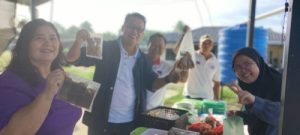
Five Strategic Pillars to Globalize the Tamu Economy
To elevate Sabah’s tamu into a competitive economic force with global reach, Mohd Khairy outlined the following five strategic pillars:
- Digital Transformation of Traditional Markets
Develop mobile-friendly e-commerce platforms tailored to rural needs, enabling the sale of products such as wild honey, herbal spices, traditional crafts, and indigenous foods directly to local and international buyers. - Formation of Inter-Tamu Micro Cooperatives
Establish cooperative networks among tamu at the district level to manage packaging, quality control, bulk marketing, and logistics — including export potential to Kalimantan (Indonesia), Mindanao (Philippines), and Brunei. - Product Certification for Export Readiness
Encourage halal, organic, and geographical indication (GI) certifications through collaboration with national agencies such as MARDI, SIRIM, and FAMA to meet regional and international standards. - Investment in Micro-Infrastructure and Mobility
Provide infrastructure such as mobile kiosks, cashless payment systems, and small-scale cold chain logistics to facilitate the delivery of rural products to ports and airports. - Global Portal for Sabah Village Markets (TDGS)
Launch a multilingual website showcasing tamu locations, vendor profiles, and product catalogs to promote local traders to global buyers, NGOs, impact investors, and eco-conscious tourists.
Preserving Identity While Unlocking Economic Potential
Mohd Khairy noted that most tamu traders in Sook belong to indigenous communities — including the Dusun, Murut, and Lundayeh — who maintain sustainable farming practices and traditional methods of production, which are increasingly sought after in international markets.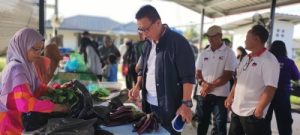
“We often label tamu as backward economies, when in fact they embody the very values the modern world is striving toward — sustainability, authenticity, and low carbon footprints,” he said.
Youth Involvement and Institutional Support Are Key
He urged that rural entrepreneurship be introduced to the younger generation and that incentives be provided to encourage youth to return to their hometowns — not just as job seekers, but as builders of new rural economies.
Mohd Khairy called on the Sabah Ministry of Agriculture and Food Industry and federal agencies such as FAMA to offer rural export incentives, intergenerational enterprise grants, and digital logistics support to accelerate this transformation.
He also advocated for stronger cross-border collaboration under the BIMP-EAGA (Brunei-Indonesia-Malaysia-Philippines East ASEAN Growth Area) framework, aiming to integrate tamu markets across Sabah, Kalimantan, and Mindanao as a regional microeconomic hub.
“If the world is searching for ethical, authentic, and climate-friendly products — this is the opportunity. We just need to guide our rural entrepreneurs to the global stage,” he added.
Bridging Rural Traditions with Global Markets
As the global economy increasingly prioritizes sustainability, fair trade, and environmental stewardship, Sabah’s rural tamu hold all the essential ingredients — what’s needed now is structured guidance and strategic execution to unlock their full potential.
“This is not just about aid — it’s about opportunity. We must position tamu traders as ambassadors of Malaysia’s rural economy to the world,” Mohd Khairy concluded.
He delivered these remarks during the “Jelajah Tamu Desa” (Village Market Outreach) program in Kg. Binuou, Sook, where he met with local traders and listened to their aspirations.
The weekly tamu in Kg. Binuou features 20 active vendors, operating every Saturday in a dedicated facility provided by the Ministry of Entrepreneur Development and Cooperatives (KUSKOP), under the leadership of Minister Datuk Ewon Benedick.
